
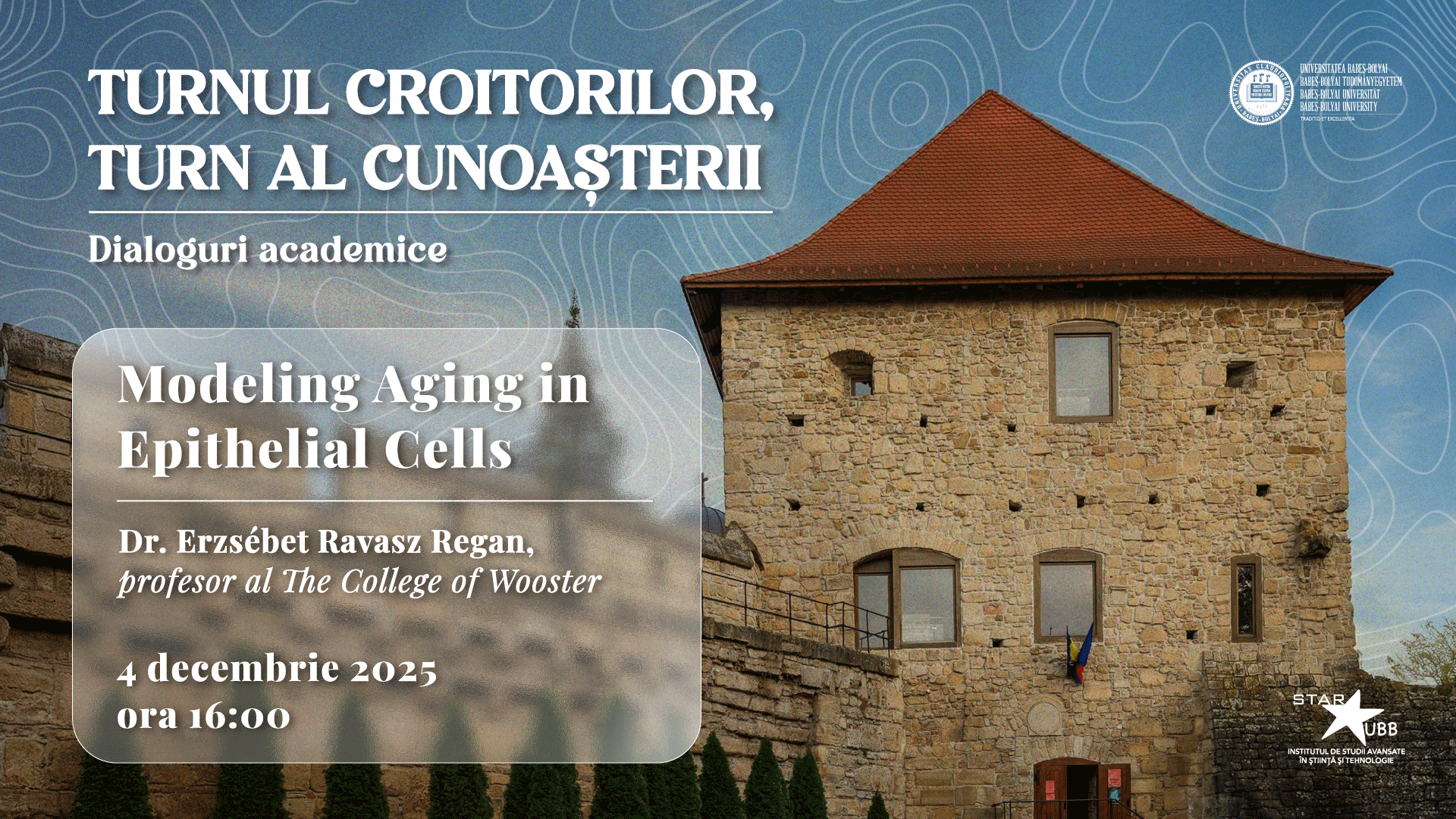
A kolozsvári Babeș-Bolyai Tudományegyetem STAR-BBTE Intézete folytatja Studium Generale előadásait. Meghívottunk ez alkalommal Dr. Ravasz Regan Erzsébet bioinformatikus, a The College of Wooster oktatója; Modeling Aging in Epithelial Cells című, angol nyelvű előadását 2025. december 4-én, csütörtökön 16:00 órától a BBTE Facebook oldalán és YouTube csatornáján lehet meghallgatni.
Az előadásról röviden:
The steady accumulation of senescent cells with aging creates tissue environments that aid cancer evolution. Aging cell states are highly heterogeneous. ‘Deep senescent’ cells rely on healthy mitochondria to fuel a strong proinflammatory secretome, including cytokines, growth and transforming signals. Yet, the physiological triggers of senescence, such as reactive oxygen species (ROS), can also trigger mitochondrial dysfunction. This energy deficit alters the secretome of these cells and causes chronic oxidative stress – a state termed Mitochondrial Dysfunction-Associated Senescence (MiDAS). Here, we offer a mechanistic molecular model for MiDAS in the form of a Boolean regulatory network that qualitatively captures key aspects of mitochondrial dynamics during cell cycle progression, apoptosis and glucose starvation, as well as MiDAS in response to SIRT3 knockdown or oxidative stress. We offer testable predictions about the growth factor- and glucose-dependence of MiDAS and its reversibility at different stages of reactive oxygen species (ROS)-induced senescence. We then link this model to our large modular model of mechano-sensitive Epithelial to Mesenchymal Transition, and show that EMT is incompatible with MiDAS. Our models provide mechanistic insights into the distinct stages of DNA-damage induced senescence, the relationship between senescence and epithelial-to- mesenchymal transition in cancer and offers a foundation for building multiscale models of tissue aging.