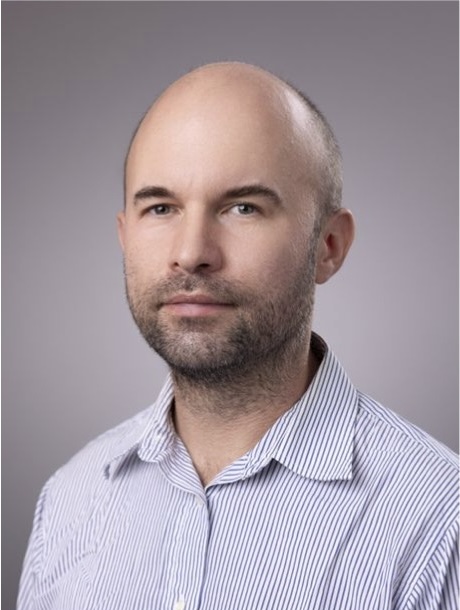
Andreas BENDER
Fields of interest/specialization: Artificial Intelligence in Medicine, Machine Learning in Drug Discovery, Omics Data Analysis, Transcriptomics, Drug Repurposing, Drug Safety, Risk Assessment, Toxicity Prediction, Cheminformatics
Short description: Dr. Andreas Bender is a Research Scientist (CS1) at UBB Cluj, as well as a Professor for Machine Learning in Medicine at the Department of Medicine at Khalifa University, Abu Dhabi, a Project Leader at UMF Cluj, and a Visiting Professor at the University of Cambridge. Earlier in his career, he has been Professor for Molecular Informatics at Cambridge University and a Director for Digital Life Sciences at Nuvisan/Berlin, as well as Associate Director for Data Science and AI in the Clinical Pharmacology & Safety Sciences group at AstraZeneca/Cambridge, UK. In his work, Andreas is involved with the integration and analysis of chemical and biological data from different sources, such as structural and bioactivity data, gene expression readouts, cellular imaging data, pathway information, electronic health records, etc., for clinically relevant decision making. On the entrepreneurial side, Andreas was founding CTO of Healx Ltd. for data-driven drug repurposing, and scientific co-founder of PharmEnable Ltd., for designing novel chemistry for targets that are difficult to drug conventionally, both based in Cambridge/UK. More recently, he was CITO of Pangea Bio, a clinical stage company located in London/UK as well as Berlin/Germany, working on CNS drug discovery supported by historical use information. The companies helped establish currently have several drugs in clinical phase 2 trials Andreas received his PhD from the University of Cambridge and worked in the Lead Discovery Informatics group at Novartis in Cambridge/MA as well as at Leiden University in the Netherlands before his current post. His work is documented in more than 300 peer-reviewed scientific articles, cited more than 25,000 times.
Google Scholar: https://scholar.google.com/citations?user=iKv2hCUAAAAJ&hl=en
ORCID: https://orcid.org/0000-0002-6683-7546
Contact: andreas.bender@ubbcluj.ro
Representative works:
Bender A, et al. Artificial intelligence in drug discovery — what it is, where we stand and the path forward. Nature Rev. Drug Discov. 2026, in press. DOI: https://doi.org/10.1038/s41573-026-01496-2
Meyer CT, Dai Y, Pomeroy AE, et al. Rethinking the role of synergy calculations in the next century of drug combination discovery. Med. 2026;7(5):101103. https://doi.org/10.1016/j.medj.2026.101103
Huynh DL, Seal S; AIA4S Consortium, et al. AI agents in drug discovery: applications and case studies. Drug Discov Today. 2026;31(3):104650. https://doi.org/10.1016/j.drudis.2026.104650
Seal S, Dee W, Shah A, et al. Counting cells can accurately predict small-molecule bioactivity benchmarks. Nat Commun. 2026;17(1):2436. Published 2026 Feb 6. https://doi.org/10.1038/s41467-026-68725-5
Seal S, Mahale M, García-Ortegón M, et al. Machine Learning for Toxicity Prediction Using Chemical Structures: Pillars for Success in the Real World. Chem Res Toxicol. 2025;38(5):759-807. https://doi.org/10.1021/acs.chemrestox.5c00033
Bender A, Schneider N, Segler M, Patrick Walters W, Engkvist O, Rodrigues T. Evaluation guidelines for machine learning tools in the chemical sciences. Nat Rev. Chem. 2022;6 (6):428-442. https://doi.org/10.1038/s41570-022-00391-9
Bender A, Cortés-Ciriano I. Artificial intelligence in drug discovery: what is realistic, what are illusions? Part 1: Ways to make an impact, and why we are not there yet. Drug Discov Today. 2021;26(2):511-524. https://doi.org/10.1016/j.drudis.2020.12.009
Bender A, Cortes-Ciriano I. Artificial intelligence in drug discovery: what is realistic, what are illusions? Part 2: a discussion of chemical and biological data. Drug Discov Today. 2021;26(4):1040-1052. https://doi.org/10.1016/j.drudis.2020.11.037